
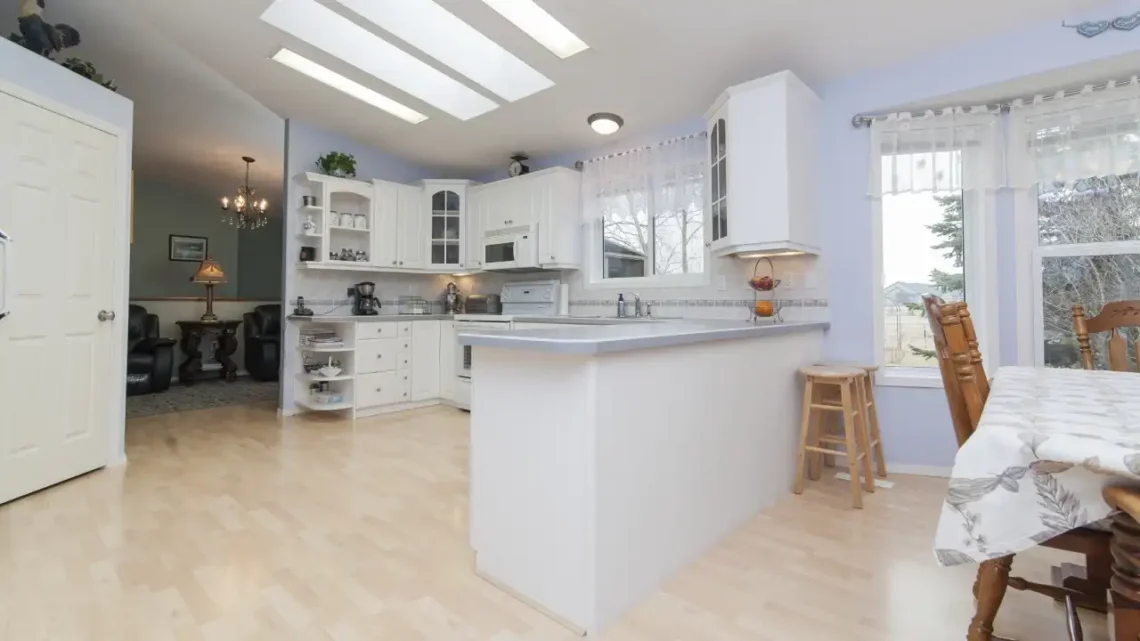
The open plan kitchen living room has become the most sought-after configuration in modern residential design, and it is not difficult to understand why. When the kitchen, dining, and living areas flow into one another without interruption, the entire ground floor of a home is transformed. Natural light travels further, family life becomes more connected, and the sense of space expands far beyond what the square footage alone would suggest. For homeowners ready to make this transformation, a kitchen extension is the most powerful tool available, and the decisions made around layout, materials, and flooring will determine the quality of the result for decades to come.
Extension Architecture specialises in designing and delivering kitchen extensions and open plan kitchen living room projects across the UK, bringing the expertise and creative ambition that this kind of transformation demands. Whether you are exploring kitchen flooring ideas or planning a full rear extension, this guide covers everything you need to design a space that truly works.
Why a Kitchen Extension Changes Everything
A kitchen extension does more than add square footage. When designed well, it fundamentally reorganises the way a home functions at ground floor level. The back of the house, traditionally a series of disconnected and underlit rooms, becomes a single generous space that connects the interior with the garden and serves as the genuine heart of the home.
The most successful kitchen extensions achieve this by thinking beyond the kitchen itself. The relationship between cooking, dining, and relaxing needs to be resolved through careful spatial planning, with each zone given its own character and definition while remaining part of a coherent whole. Ceiling heights, the placement of roof lights, the positioning of bifold or sliding doors, and the choice of materials all contribute to how the space feels and performs in daily life.
Designing the Open Plan Kitchen Living Room
The open plan kitchen living room works best when each zone within it is thoughtfully considered rather than simply merged into an undifferentiated expanse. The kitchen itself benefits from a clear and ergonomic layout, typically arranged around an island that provides both preparation space and an informal social hub. The island becomes the natural boundary between the cooking zone and the dining and living areas beyond, creating definition without enclosure.
The dining area sits comfortably between the kitchen and the living zone, positioned to take advantage of views into the garden and the natural light that a well-designed extension draws deep into the plan. The living area, furthest from the kitchen, benefits from a slightly more settled and enclosed character, perhaps defined by a change in ceiling height, a feature wall, or a carefully positioned sofa arrangement that creates a sense of destination within the larger open space.
Glazing plays a central role in the success of any open plan extension. Full-width bifold or sliding doors that open the rear wall entirely to the garden dissolve the boundary between inside and outside during warmer months and flood the interior with light throughout the year. Roof lights positioned over the kitchen zone bring daylight into the centre of the plan where windows alone cannot reach, eliminating the dark middle ground that characterises so many extended ground floors.
Kitchen Flooring Ideas for Open Plan Spaces
Flooring is one of the most consequential decisions in an open plan kitchen living room, and it deserves careful thought. Because the space is continuous, the flooring material needs to perform across a range of conditions, from the hard wear of a working kitchen to the comfort expectations of a relaxed living area.
Large format porcelain tiles are among the most popular choices for open plan kitchen extensions, and for good reason. They are exceptionally durable, easy to clean, highly resistant to moisture, and available in a vast range of finishes that convincingly replicate natural stone, polished concrete, or warm timber tones. Large format tiles with minimal grout joints create a seamless, expansive surface that reinforces the sense of space and works beautifully under underfloor heating.
Engineered hardwood flooring brings warmth and natural character to an open plan space and is a particularly strong choice in living and dining zones. Unlike solid hardwood, engineered boards are dimensionally stable enough to be used over underfloor heating and in areas subject to moderate moisture exposure, making them viable across the full extent of an open plan layout when properly specified and installed.
Polished concrete, either poured in situ or achieved through large format concrete-effect porcelain, delivers a refined, contemporary aesthetic that works particularly well in extensions with a strong architectural character, significant glazing, and a connection to a landscaped garden. It is a material that rewards confident design and a clear commitment to a particular spatial vision.
For homeowners who want the warmth of natural materials throughout, limestone and travertine offer a timeless quality that works across kitchen, dining, and living zones without effort. Both benefit significantly from underfloor heating, which brings out their thermal mass and creates a surface that is genuinely comfortable underfoot.
Working with Extension Architecture
Every successful open plan kitchen living room begins with a design process that takes the specific qualities of the existing house as its starting point. Extension Architecture works with homeowners to understand how they live, what they need from the new space, and how the extension can be designed to deliver the maximum possible transformation within the constraints of the site and planning context. From spatial planning and glazing strategy through to material specification and flooring selection, the team brings the expertise and creative commitment that a project of this ambition deserves.
For more informative articles, visit our site daily.
Regards