
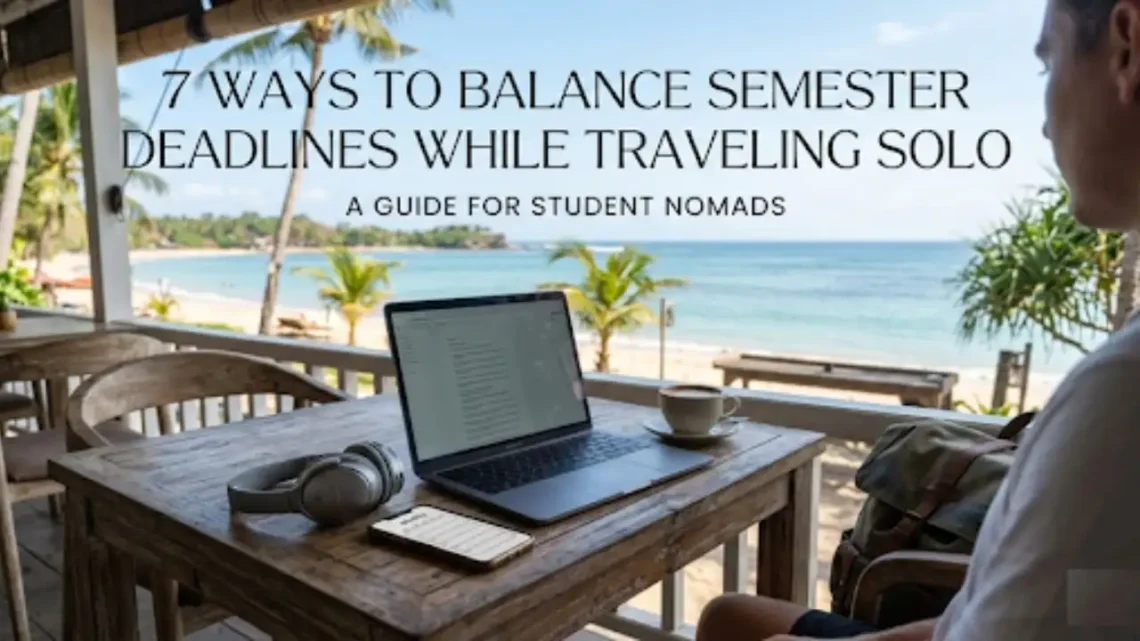
The dream of “studying abroad” has shifted. It’s no longer just about formal exchange programs; it’s about the rise of the student nomad. Today’s undergraduates are realizing they don’t have to wait for graduation to see the world. However, the reality of a 2,000-word sociology essay due while you’re trying to catch a ferry across the Java Sea can be a recipe for a mental breakdown. Finding that sweet spot between adventure and academic integrity is an art form.
Maintaining your GPA while navigating solo travel requires more than just a laptop and a dream; it requires a strategic toolkit of academic resources. For many, the weight of multiple modules can become a barrier to exploration. To stay on track, students often turn to professional platforms like MyAssignmentHelp Services to manage complex coursework. Whether you are dealing with a difficult research paper or simply need someone to do my assignment while you are off the grid, having a reliable support system ensures that your travel memories aren’t clouded by the fear of a failing grade.
1. The “Golden Window” Time Management Strategy
When you are traveling solo, your schedule is entirely your own. This is a superpower if used correctly. Most students make the mistake of trying to “squeeze in” study time between sightseeing stops. Instead, identify your “Golden Window”—the three-hour block where your brain is most active.
For some, it’s 7:00 AM before the hostels wake up; for others, it’s late at night after the tours end. By dedicating a consistent, non-negotiable block to your heaviest academic tasks, you free up the rest of your day for guilt-free exploration.
2. Leverage “Deep Work” in Transit
Travel involves a lot of waiting—trains, planes, and long bus rides. Instead of scrolling through social media, use this as your focused “Deep Work” zone.
- Offline Mode: Download your reading materials and lecture slides beforehand.
- Noise Cancellation: Invest in good headphones to drown out the chatter of a busy terminal.
- The Sprint Method: Set a timer for the duration of your flight or bus ride. Tell yourself you will finish one specific chapter or outline by the time you land.
3. Sync Your Syllabus with Your Itinerary
Before you book your flights, look at your academic calendar. This is the most underrated travel hack for students.
| Travel Period | Academic Load | Travel Intensity |
| Mid-Term Week | Very High | Low (Stay in one city with good Wi-Fi) |
| Reading Break | Moderate | Medium (Regional travel) |
| Post-Exam | Zero | High (Island hopping / Remote areas) |
If you know a major project is due in Week 7, don’t plan a multi-day trek in a remote jungle during Week 6. Spend that week in a digital-nomad-friendly hub with high-speed internet.
4. Optimize Your Digital Workspace
A student traveler is only as good as their gear. You don’t need a mobile office, but you do need reliability. Carry a lightweight laptop, a universal power adapter, and a portable power bank.
More importantly, use cloud-based storage like Google Drive or Notion. If your laptop gets damaged or stolen (a rare but real risk for solo travelers), your semester’s work isn’t lost. Syncing your files daily ensures that your progress is safe in the “cloud” while you are on the ground.
5. Be Realistic About Your Mental Bandwidth
Travel fatigue is real. Navigating a new country, a new language, and a new currency takes a massive amount of “brain power.” By the time you get back to your room, you might be too exhausted to write a high-level academic critique.
Recognize when you are hitting a wall. It is better to delegate or ask for help early than to submit a rushed, poor-quality paper at 3:00 AM. Using an academic service to assist with the heavy lifting of research allows you to maintain your standards without sacrificing your health.
6. Curate “Study Cafes” Rather Than Hostels
Hostels are great for meeting people, but they are often the worst places to get work done. The “Fear Of Missing Out” (FOMO) is strongest in a hostel common room.
Instead, research “work-friendly” cafes in your destination. Look for places with:
- Plenty of power outlets.
- A quiet atmosphere (avoid the main tourist plazas).
- Strong Wi-Fi reviews on sites like Workfrom or TripAdvisor.
Making “cafe hopping” a part of your travel experience allows you to see the local lifestyle while remaining productive.
7. The “One-In, One-Out” Rule
For every major travel experience you tick off your bucket list, finish one academic task. Want to go on that sunset boat tour? Finish your discussion post first. Planning a full day at a museum? Get your bibliography done the night before. This reward-based system keeps your dopamine levels high and your stress levels low.
Why Students Choose Professional Support While Abroad
The modern educational landscape is incredibly competitive. When you are competing with students who are sitting in a library 12 hours a day, traveling can feel like a disadvantage. This is where services like myassignmenthelp services come into play. They level the playing field, providing expert insights and structural help that allow you to submit top-tier work from anywhere in the world.
For more travel information, visit this page daily.
Frequently Asked Questions (FAQ)
Q1: Is it possible to study for exams while traveling solo?
Yes, but it requires discipline. Focus on active recall and flashcards (like Anki) which are easy to use on your phone while sitting in parks or waiting for transport.
Q2: How do I find reliable Wi-Fi in remote travel areas?
Always check “speed test” reviews on booking sites. Alternatively, purchase a local SIM card with a high data cap to use your phone as a hotspot in case the local Wi-Fi fails.
Q3: Is using an assignment service considered “cheating”?
Using a service for research, outlining, and tutoring is a legitimate way to manage your workload. It provides a template and a guide to ensure you understand the material while meeting strict deadlines.
Q4: What should I do if a deadline is approaching and my internet fails?
This is the solo traveler’s nightmare. Have a backup plan: know where the nearest 24-hour business center or international hotel is located, as they almost always have backup generators and stable internet.